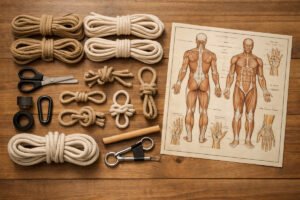
Ahhhhh Femdom bondage how I love thee, let me count the ways!
Table of Contents
Why is Femdom bondage such fun?
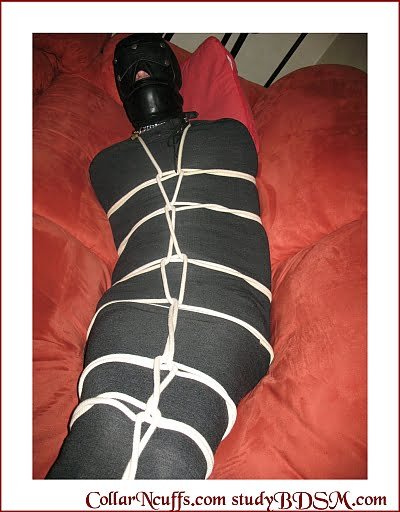
Bondage within Female Domination is more than rope and restraints — it is trust, surrender, control, sensation, and psychological intensity all woven together. Whether simple wrist ties or full immobilisation, bondage is one of the most powerful expressions of power exchange.
But why is Femdom bondage so intoxicating?
Why Is Femdom Bondage So Powerful?
There are several reasons bondage holds such a strong appeal in Femdom dynamics.
1. The Eroticism of Helplessness
For many submissives, the knowledge that they are restrained — unable to move, unable to interfere — is profoundly arousing.
The statement:
“I’m going to make you cum, and there’s nothing you can do about it.”
…isn’t just sexual. It’s psychological.
To allow yourself to be bound is an act of trust. To bind someone is an act of responsibility. That tension creates intensity.
2. The Physical Sensation of Constriction
Rope, leather, cuffs — tight but controlled pressure across the body can heighten awareness dramatically.
Many submissives describe bondage as:
- Comforting
- Cocooning
- Grounding
- Intensely stimulating
Restriction removes distraction. When movement is limited, sensation becomes amplified.
3. The Struggle Response
For some, the instinct to pull against restraints creates a powerful physical charge. Muscles strain, breath shortens, nerves fire.
Bondage can intensify orgasm because the body is already activated. That tension releases explosively.
4. Verbal Bondage (Psychological Restraint)
Not all bondage requires rope.
Commanding a submissive to hold position — not to move — while being teased or tormented is a powerful form of control.
A simple psychological exercise:
Have them hold five coins between their fingertips and command them not to drop one. Then begin teasing. The sound of a falling coin becomes both failure and anticipation.
Power does not always require hardware.
Bondage Safety: Non-Negotiable Rules
Bondage is beautiful when done responsibly.
It is dangerous when done carelessly.
Never Leave a Bound Person Alone
A bound partner cannot respond to:
- Fire
- Intruders
- Medical emergency
- Sudden fainting
Fantasy scenarios of “leaving them helpless” must remain fantasy. Presence and supervision are mandatory.
Watch Circulation Carefully
If extremities:
- Turn blue
- Feel cold
- Lose sensation
- Tingle excessively
Release immediately.
A good rule:
Tie loosely using multiple wraps rather than one overly tight bind.
Hands or feet “falling asleep” is not sexy — it is nerve compression.
Neck & Breathing Safety
Never apply pressure to the front of the neck. The carotid arteries supply the brain. Even light pressure can cause unconsciousness quickly.
With:
- Gags
- Hoods
- Body bags
- Mummification
You must monitor breathing constantly.
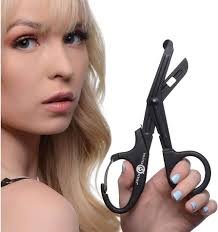
Quick-release mechanisms and bandage scissors must always be within reach.

Avoid Standing Suspension Without Knowledge
Standing restrained for long periods can cause:
- Head rush
- Drop in blood pressure
- Sudden fainting
If using hooks, ensure they are “panic snap” quick-release style that disengage under full weight (as shown above).
Fire & Environmental Awareness
Bound individuals cannot flinch.
Be cautious with:
- Candles
- Heated pipes
- Open flames
- Electrical devices
Control the environment before you control your submissive.
Common Femdom Bondage Equipment
Below are some common devices used in restraint play.
Mummification (Cocooning)
Full immobilisation — often using plastic wrap — creates complete restriction.
Typical method:
- Wrap limbs individually
- Bind arms to sides
- Secure legs together
- Lay on soft surface
Important considerations:
- Body heat builds quickly.
- Sweating may be restricted.
- Monitor for overheating.
- Have bandage scissors ready.
When releasing someone from mummification, warmth (blanket or robe) helps regulate temperature quickly.
Like to know more try our 100%FREE Learning programs on Mummification
Bondage Hoods
Hoods are typically made from:
- Leather
- Rubber
- Latex
Variations include:
- Eye openings or none
- Mouth openings or none
- Built-in sensory deprivation
- Zippers or lace closures
Important:
Breathing must never be compromised.
Many practitioners will not use hoods without quick-release options.
Never leave a hooded partner unattended.
Bondage Body Bags (Sleep Sacks)
These enclose the entire body and may include:
- Internal arm sleeves
- Access points for stimulation
- External lacing
- Suspension straps
Spandex models are restrictive but flexible.
Leather versions are heavier and more extreme.
As always:
Breathing access and rapid release are critical.
Arm Binders
Devices that bind arms securely behind the back.
Some are:
- Full sleeve leather binders
- Central back strap systems
- Shoulder harness restraints
Avoid long-term strain in shoulders. Check hand sensation frequently.
Hobble Skirts (Bondage Skirts)
Fetish fashion often acts as functional restraint.
A hobble skirt fits snugly from waist to ankles, restricting stride to inches.
Combined with high heels, it creates near immobility without visible restraints.
Leather and rubber are common materials, though satin and velvet versions exist.
Control can be elegant.
Choosing the Right Restraint for Beginners
If you’re new to bondage, consider starting with:
- Padded wrist cuffs
- Velcro ankle restraints
- Under-bed restraint systems
Avoid:
- Cheap metal handcuffs (they tighten under pressure and can pinch nerves)
- Improvised neck restraints
- Complex suspensions
Quality equipment reduces risk.
Communication & Safe Words
Before any bondage scene:
- Discuss limits
- Establish a safe word
- Create a non-verbal safe signal (for gagged play)
Consent and communication are the foundation of safe Femdom bondage.
Without that, it is not power exchange — it is danger.
Frequently Asked Questions About Femdom Bondage
Is Femdom bondage always sexual?
Not necessarily. Bondage can be erotic, psychological, aesthetic, or purely about control and power dynamics.
Is rope bondage safe for beginners?
It can be — if you avoid nerve compression areas, monitor circulation, and keep safety tools nearby. Education is essential.
Can bondage cause permanent damage?
Yes — if done improperly. Tight restraints, pressure on nerves, or restricted breathing can cause serious injury. Safety awareness prevents this.
What is the safest type of bondage to start with?
Padded cuffs with quick-release closures are generally safest for beginners.
Is it safe to leave someone tied up alone?
No. A bound person must always be supervised.
Final Thoughts on Femdom Bondage
Bondage is not just restraint.
It is:
- Trust
- Responsibility
- Control
- Sensory focus
- Psychological intensity
When done with knowledge and care, Femdom bondage deepens connection and magnifies power exchange beautifully.
When done carelessly, it risks harm.
Respect the rope. Respect the body. Respect the dynamic.
Absolutely — this section will strengthen both SEO and authority positioning. Here’s a clean 300+ word addition you can place just above the FAQ section.
Common Mistakes in Bondage Play (And How to Avoid Them)
Even experienced players can make mistakes in restraint play. Bondage magnifies sensation and power exchange — but it also magnifies risk if approached carelessly. Here are some of the most common errors and how to prevent them.
1. Tying Too Tight, Too Fast
New Dominants often believe tighter equals more effective. In reality, tight single-loop restraints increase the risk of nerve compression and circulation loss.
Better approach:
Use multiple wraps with moderate pressure. This distributes tension more safely and allows adjustments during the scene.
Remember — bondage should restrict movement, not damage tissue.
2. Ignoring Nerve Pathways
Certain areas of the body are more vulnerable to nerve injury, especially:
- The inside of the upper arm
- The wrist (thumb side)
- Behind the knee
- The side of the neck
Pressure on these areas for prolonged periods can cause numbness or longer-term complications. Education about basic rope safety and anatomy significantly reduces risk.
3. Skipping Communication
Assuming your partner is “fine” because they are quiet is dangerous.
A submissive may:
- Feel tingling but hesitate to speak
- Experience emotional overwhelm
- Be afraid of disappointing their Dominant
Regular check-ins maintain trust and safety. Even a simple, “Color?” or agreed hand signal keeps communication active.
4. Leaving Someone Alone
This mistake cannot be stressed enough.
A restrained person is physically helpless. Even a short absence increases risk in case of:
- Fainting
- Breathing difficulty
- Environmental emergency
Fantasy is powerful. Responsibility is stronger.
5. Focusing Only on Physical Control
Bondage is not just mechanical restraint — it is psychological containment. Many beginners focus on gear instead of dynamic.
The power lies in:
- Voice
- Eye contact
- Control of timing
- Ritual
Restraints are tools. Authority is the art.
6. Neglecting Aftercare
After release, the body may experience:
- Coldness
- Light-headedness
- Emotional drop
Providing warmth, reassurance, and physical comfort helps regulate both nervous system and emotional state. Bondage can be intense — grounding afterward reinforces safety and trust.
Avoiding these common mistakes turns bondage from risky experimentation into controlled, confident Femdom play.
Further reading:
Bondage safety– Playing it safe with Bondage. What are dangers?
Related Articles:
Rope Storage– How to store your BDSM rope for longer life and ease of use.
What rope– what type of Bondage rope should I use ?
Washing rope-My Bondage ropes all dirty can I wash it ? what do I use?
Whipping rope-How can I stop my bondage rope from coming unravelled on the ends?
Dying Rope – How to dye bondage play rope to the color of your choice.